UX audit

A UX audit finds where users get stuck

We review your product or website against usability principles and your own data, then rank every issue by impact and effort, so you know what to fix first.

  • 5 to 7 days from kickoff to walkthrough
  • A ranked list of what to fix first
  • One piece redesigned as proof

Two audits

Product or website, the audit follows where people drop off

Same method, different questions. We’ll pick the track with you, or combine both.

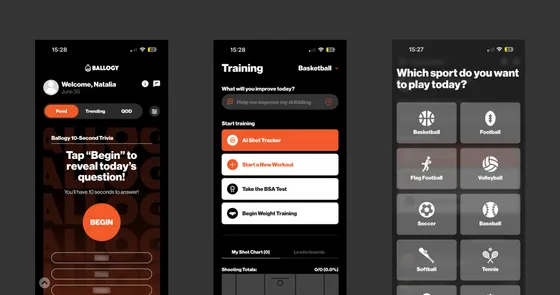
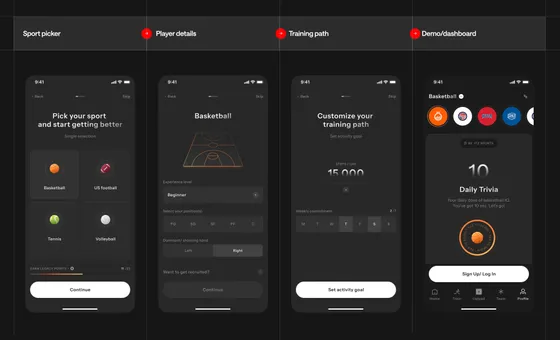
How a product audit runs5 to 7 days · Ballogy
  1. Day 1

    • Kickoff You: A call on your goals, the numbers you watch and what you already suspect.
    • Access You: Demo or TestFlight access, analytics if you have them, and the requests your team hears most. Read-only is enough.
    • Walk every flow Review: Onboarding, the core flows and each role, checked against usability heuristics and accessibility, with your data beside it.
  2. Day 2

    • Questions You: One person, usually the founder, PM or marketing lead, answers a few messages over the week.
  3. Day 3

    • Day 4

      • Rank the findings Rank: Each issue gets evidence, a severity and an effort, so the list sorts itself into quick wins and bigger moves. For Ballogy: a long onboarding new users dropped out of, and parents set up as a copy of the player.
    • Day 5

      • Redesign one fix Proof: The most important fix, redesigned as proof of the direction, and a recorded walkthrough. Ballogy went on to a redesign of every flow, starting with onboarding.
    • Day 6

      • Day 7

        • Findings call You: We go through the findings together and agree what ships first.
      How a website audit runs5 to 7 days · Seamless.AI
      1. Day 1

        • Kickoff You: A call on your goals, the numbers you watch and what you already suspect.
        • Access You: The site, plus analytics or heatmaps if you have them. Read-only is enough.
        • Walk every page Review: Messaging, conversion paths, forms and CTAs, navigation and speed, with comments pinned where the problem is and your analytics beside it.
      2. Day 2

        • Questions You: One person, usually the founder, PM or marketing lead, answers a few messages over the week.
      3. Day 3

        • Day 4

          • Rank the findings Rank: Each issue gets evidence, a severity and an effort. On the Seamless.AI homepage only about 5% of visitors gave an email and clicked the main CTA, and around a quarter scrolled past the fold.
        • Day 5

          • Redesign one fix Proof: The sprint ended in one recommendation, a refreshed hero. Seamless shipped it, saw an immediate lift, and the work grew into a page-by-page redesign.
        • Day 6

          • Day 7

            • Findings call You: We go through the findings together and agree what ships first.

          Product audit

          For an app or SaaS product: the flows people use every day, from the first sign-up to the task they came for.

          What we look at

          • Onboarding
          • Core flows
          • Activation
          • Usability heuristics
          • Accessibility
          • Design system consistency
          • Empty and error states
          • Mobile

          Typical situations

          • People sign up, then never reach the moment the product makes sense.

          • Onboarding has grown long and new users drop out halfway.

          • Players, admins or parents share one flow that fits none of them.

          • Years of features have buried the core task.

          • Support answers the same “how do I” questions every week.

          • A redesign is coming and you want to know what is actually broken.

          How it looks

          Ranked findings, not a 90-slide report

          Every finding has its evidence, a severity, the effort to fix it and the change we recommend.

          FindingsExample rows, not from a client
          Findings: Example rows, not from a client
          #FindingWhereSeverityEffortRecommended fix
          Free trial hidden below three plan tablesPricing pageHighLowLead with the trial, move plan details under it
          Sign-up asks for company size and phone firstSign-upHighMediumAsk after the first win in the product
          Date field opens the wrong keyboard on mobileDemo formMediumLowUse a native date input
          Empty dashboard gives no next stepFirst sessionHighMediumSample data and one guided task
          No visible focus state on the main navigationSitewideMediumLowAdd focus styles to the nav component
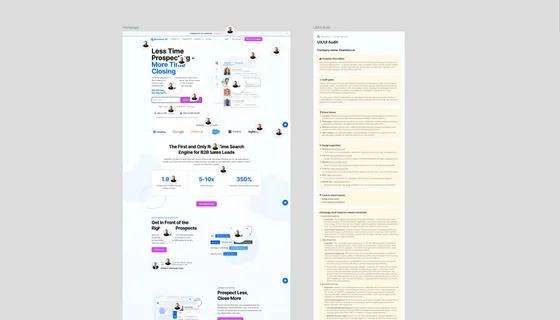
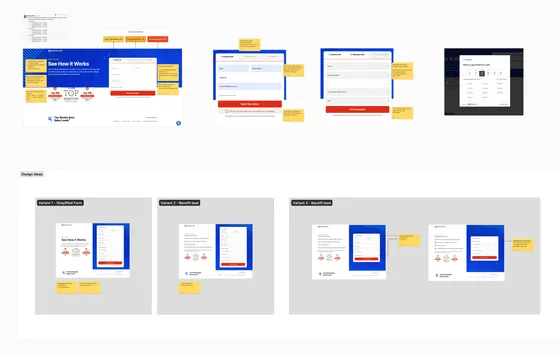
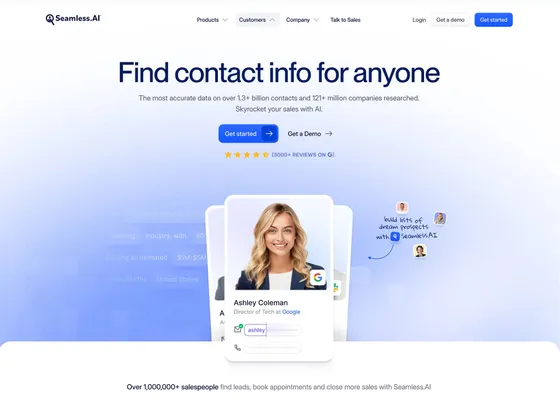
          • Seamless.AI homepage with reviewer comments pinned to it, next to the written UX and UI audit
            Annotated pages
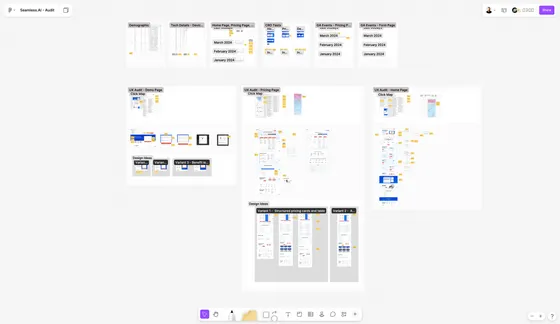
          • Seamless.AI audit board in Figma: demographics, device and traffic data, click maps of the home, pricing and demo pages, and design ideas for each
            The audit board
          • Seamless.AI demo page annotated step by step, with three redesign variants for the form underneath
            Design ideas per page
          From the Seamless.AI audit
          • Figma board

            Annotated screens, click maps and design ideas per page or flow.

          • Findings table

            Ranked by severity and effort, ready to drop into your backlog.

          • Recorded walkthrough

            A short video of the findings, so the whole team hears the same story.

          Time and price

          Days, not months, and very little of your team’s time

          Most teams start with the audit sprint. If it earns its place, the fee comes off whatever comes next.

          Deep audit

          Scoped on a call

          Page by page or flow by flow, with your analytics, heatmaps, recordings and the people who own the numbers.

          Price on request / 2 to 4 weeks

          Book a call

          What’s included

          • Heatmaps, click maps and recordings
          • Device, browser and funnel splits
          • Tracking check
          • Page-by-page or flow-by-flow findings
          • Recorded walkthrough of the findings

          What we need from you

          1. A kickoff call

            Your goals, the numbers you watch and the problems you already suspect.

          2. Access

            The product or site, plus analytics or heatmaps if you have them. Read-only is enough.

          3. One person to answer questions

            Usually the founder, PM or marketing lead, a few messages over the week.

          4. A walkthrough call

            We go through the findings together and agree what ships first.

          Outcomes

          Where an audit has led, with the numbers our clients saw

          An audit tells you where to look. The lift comes from shipping the fixes, which is why we stay close to that part.

          What you get

          What you keep when the audit is done

          Yours to keep, whether we do the fixes or your team does.

          • Ranked findings

            Every issue with evidence, severity, effort and a recommended fix.

          • Annotated screens

            The pages or flows we reviewed, with notes pinned where the problem is.

          • One piece redesigned

            A real redesign of the most important fix, as proof of the direction.

          • Quick wins

            The changes worth shipping in the first sprint.

          • Data notes

            What analytics, heatmaps and recordings show, where you have them.

          • Accessibility check

            Contrast, focus states, labels and keyboard use, checked against WCAG 2.2.

          • The Figma file

            The whole board, editable, owned by you once the invoice is paid.

          • A walkthrough

            A recorded run-through and a call to agree what ships first.

          Leave your details

          Not ready to book a call? Leave your details and we’ll reach out.

          Tell us what to audit. We’ll reply within 1 business day with questions or a time to talk.

          What should we audit?

          We use these details to reply about your audit. Privacy policy

          FAQ

          Questions about the UX audit

          Adrian

          Not sure which audit fits?

          Tell us where people drop off and we’ll suggest the scope.

          What is a UX audit?

          A UX audit is a structured review of a product or website that finds where users struggle and ranks what to fix first. It combines expert review against usability heuristics with evidence such as analytics, heatmaps, recordings and support feedback.

          How long does a UX audit take?

          The audit sprint takes 5 to 7 days. A deep audit that includes analytics, heatmaps and recordings page by page usually takes two to four weeks, because the data has to be collected and the tests have to run, depending on how many flows are in scope and how quickly we get access.

          How much does it cost?

          The audit sprint is $2,500, and the fee is credited to any package if you decide to continue. The deep audit is priced on request: we scope it on a call, because it depends on the number of pages or flows and the data you have.

          Do I need a product audit or a website audit?

          If people struggle after they sign up, it’s a product audit: onboarding, core flows, activation. If they struggle before, it’s a website audit: messaging, conversion paths, forms. Many SaaS teams need a bit of both, and we can combine them.

          What do you need from us?

          A kickoff call, access to the product or site, analytics or heatmaps if you have them, and one person who can answer questions during the week. Every audit ends with a recorded walkthrough of the findings and a call to agree what ships first.

          What is the difference between a UX audit and usability testing?

          An audit is an expert review: specialists inspect the product against known principles and existing data. Usability testing watches real users attempt real tasks. Audits are faster and more affordable and catch many obvious problems, but they cannot replace research with users. The best audits end with a shortlist of questions worth testing.

          Can our own team do the fixes?

          Yes. The findings, annotated screens and Figma file are yours to keep, and each fix is written so a designer or developer can pick it up. Many teams ship the quick wins in-house and bring us in for the bigger changes.

          Do you sign an NDA before the audit?

          Yes. We can sign an NDA before reviewing private materials, unreleased products, decks, internal tools, or roadmap details.

          What happens after the audit?

          You decide. Some teams take the list and ship it themselves. Others continue with us on a project or a monthly plan, and the audit fee is credited to it. Seamless.AI and Ballogy both started this way.

          You've reached the end, so now…

          Tell us what you’re building.

          We’ll help you map the right scope, team, timeline, and next steps.

          Book a call