Are Design Subscriptions Still Worth It in 2026?

Adrian KuleszoCo-founderUpdated
Table of contents
- Where the model came from, and what changed
- What the options cost in 2026
- When a subscription is worth it
- When it isn’t
- The middle option: a team retainer
- How our design subscription works, step by step
- The team behind a plan
- How requests flow, and how fast they move
- What a team retainer is good for, and what it isn’t
- Proof: what long retainers have looked like
- DesignMe retainer vs a production subscription vs an in-house hire
- Questions to ask any design service before you sign
- So, are they worth it?
- FAQs
Design subscriptions are worth it when you have a steady flow of well-defined requests and someone in-house to set priorities. They’re the wrong buy when you need strategy, a launch date or a build. The model has also changed: even the company that started it has dropped the word “unlimited”.
I run DesignMe, which sells monthly plans as well as fixed projects, so I have a stake in this. Below are the real prices, checked on 10 October 2026, and a straight answer on when each option fits, including when a lower-priced subscription is the better choice.
Where the model came from, and what changed
Flat-rate, unlimited design started with Design Pickle, which launched in January 2015. Designjoy, founded by Brett Williams in 2017, made the solo, one-request-at-a-time, premium version famous. Since then dozens of services have copied the pitch: one monthly price, unlimited requests, pause or cancel anytime.
The pitch has worn thin. On 2 June 2025 Design Pickle officially dropped “unlimited” from its brand. Its founder, Russ Perry, wrote that there is no such thing as unlimited and that some clients felt misled when the promise didn’t match the reality. The company moved to pricing by daily hours of support.
That doesn’t make subscriptions bad. It means you should read them as what they are: a queue of requests, worked through at a pace the vendor sets.
What the options cost in 2026
Prices from each company’s own pricing page, checked on 10 October 2026. They change often, so check again before you buy.
The in-house line comes from public data. The US Bureau of Labor Statistics put the median pay for web and digital interface designers at $104,000 in May 2025, and its June 2026 employer cost survey found wages are 70.0% of total compensation in private industry, which puts one designer at roughly $148,600 a year before recruiting. SHRM’s 2026 recruiting benchmarking puts the median time to fill a role at 39 days, before onboarding.
- $104,000
- median pay, US web and digital interface designers (May 2025)
- 70.0%
- of total compensation is wages
- $148,600
- a year for one designer, roughly, before recruiting
- 39 days
- median to fill a role, before onboarding
When a subscription is worth it
A flat-rate subscription works well when three things are true:
- The requests are well defined. A LinkedIn ad set, a one-pager for sales, a webinar landing page from an existing template. The designer doesn’t need to decide what the work is for.
- The volume is steady. You always have the next request ready, so the queue never sits empty.
- Someone in-house owns priorities. A marketing lead who writes clear briefs and reviews fast. Subscriptions move at the speed of your feedback.
If that’s you, a production subscription at $699 to $4,500 a month is good value, and Designjoy at $4,995 gets you one senior designer at a flat price, with Webflow builds included. We say the same on our Designjoy comparison: for that brief, it is a very good choice.
When it isn’t
- You need strategy, not output. Positioning, a sitemap, what the homepage should say. One-request-at-a-time models aren’t built for work that has to be worked out first.
- You have a date. A raise, a launch, a trade show. A queue gives you throughput, not a deadline.
- You need it built. Most subscriptions are design only, or build on one platform. A site in Framer, Astro or Next.js with a CMS, analytics and forms needs developers in the same loop.
- The work is bigger than a request. A product flow, a design system or a brand doesn’t fit in a 48-hour cycle, and splitting it into tickets is how it loses coherence.
- Daily caps matter. Some services publish them: Kimp’s pricing page says its team works two to two and a half hours each business day per subscription. Read the terms, not the headline.
The middle option: a team retainer
A team retainer sells a team’s capacity for the month instead of a queue. It’s the model we run at DesignMe, and Flowout runs a similar one for Webflow work.
A queue vs. a team
Subscription
A queue of requests
Usually one at a time, with one designer
Team retainer
A team's capacity for the month
A project manager, with the specialist each task needs (design, the build or growth) from a team of 15
Our monthly plans, from our pricing page:
- Design: $6,000 a month, one active request
- Development: $8,000 a month, one active request
- Design + Development: $12,000 a month, two active requests
- Add-ons: SEO and AEO, or CRO, from $3,000 a month each, on any plan
Every plan is billed monthly, with updates every 24 to 48 hours and a weekly call. At any time you have one or two senior designers plus a project manager, and engineers join when the work needs them, from a team of 15. The files and code are yours. Every monthly plan also comes with two separate options: you can pause for a month when work slows, and you can cancel anytime. Need a smaller retainer? A 25-hour pack is $3,000, and you use the hours when you need them. Early-stage teams backed by YC, a16z or a similar fund get 10% off any monthly plan or add-on.
The difference from a subscription is range, not price. Brand, website, product, the build and growth after launch come from one team, so a website doesn’t wait for a hand-off to a developer. If you’d rather buy a fixed scope with a launch date, our early-stage packages run $15k, $25k and $35k, live in 2 to 8 weeks depending on the package.
How our design subscription works, step by step
“Team retainer” means different things at different agencies, so here’s exactly what a month with us looks like. It’s the same six steps for every client, and they’re the ones on our design subscription page.
A month on a DesignMe plan
- Day 1
Book a call: tell us what you’re building, and we recommend the plan and the team.
- Day 1
Choose a plan: design, development or both, monthly or quarterly.
- Day 2
Kick off in Slack: a shared channel, your client board and a dedicated project manager.
- Day 3
Request anything: add tasks to the board and set the priority.
- Every day
Review and ship: most requests move in 24 to 48 hour cycles, and nothing ships until you approve it.
- Any month
Scale up for a launch, pause for a month, switch plans or cancel.
On the first call you can bring a brief, or just the problem. We learn your product, your priorities and your roadmap, and you leave with a recommended plan and team. On day 2 we set up the shared Slack channel and your client board, organise the backlog and plug the team into your tools. We can work in your Figma, repo, CMS and hosting from day one, so nothing lives only on our side. By day 3 the board is open and you can start adding requests.
What each plan includes
Every monthly plan includes a dedicated project manager who plans the work and keeps you updated. The rest depends on the plan you pick. Here’s what’s in each one, from our pricing page, where the current prices live:
| Plan | What’s included | Team | Best for |
|---|---|---|---|
| Design only | Product design, website design, brand and pitch decks, motion design | Project manager, product designer, website designer, graphic designer | Teams whose own engineers build |
| Development only | Framer and Webflow, Astro and Next.js, CMS and integrations (forms, analytics, CRM) | Project manager, software engineer | Teams that have the designs and need them built well |
| Design + Development | Product, website and brand design, plus the build in Framer, Webflow, Astro or Next.js | Project manager, product designer, website designer, software engineer | One team for the design and the build |
| Design + Development + Growth | Everything above, plus SEO and AEO and conversion optimisation | Adds a product lead who sets the direction across product, site and growth | One senior team for product, site and growth |
| 25-hour packs | Hours you spend on any design or development task, requests in Slack | Project manager, plus whoever the task needs | Lighter months, small updates and one-off tasks |
Two things are true on every plan. The final Figma files, brand assets, code and documentation are yours, with no proprietary system keeping you locked in. And pausing and cancelling are separate options: you can pause for a month when the roadmap slows down, or cancel anytime, with no notice.
The team behind a plan
We’re a team of 15 senior designers and developers, based in Gdańsk, Poland. Our day covers European hours and the US East Coast morning, which matters more than it sounds when your founders are in New York and you want feedback turned around before lunch.
A standard plan gives you one to two senior designers and a project manager. Bigger projects get more people. These are the roles the work is drawn from:
- Project manager: your single point of contact. Runs the backlog, the priorities and the updates.
- Product lead: sets the direction across product, site and growth.
- Product designer: flows, product UI and the design system.
- Website designer: marketing pages, landing pages and tests.
- Graphic designer: brand, decks, motion and marketing assets.
- Software engineer: Framer, Webflow, Astro and Next.js builds.
- AI engineer: agents and AI workflows your team keeps using after launch.
Here’s why that shape matters. A brand job goes to a brand designer and a build goes to an engineer, so you’re not paying one generalist to stretch. Approved design goes straight to development, so nothing waits on a hand-off. And there’s nothing for you to recruit or manage: no hiring, onboarding or reviews, because our project manager runs the team. N3XT’s CTO, Aurelien Bonnel, put it this way in his review: “Excellent project management capability, centralized in one person who orchestrates the projects’ tasks and aligns the efforts to the needs.”
One team, brand to product
WebsiteQuotient
How requests flow, and how fast they move
Requests live on your board. You add anything you need and set the priority, we work through the highest-priority request first, and the next tasks stay queued behind it. There’s no limit to how much you can keep in the backlog. If you need more moving at once, a bigger plan or a 25-hour pack adds capacity (that’s the honest answer to “unlimited”: the backlog is unlimited, the people working on it are not).
Day to day, we run on Slack and Notion. You get a client portal in Notion with all the documentation and a kanban-style task board, and requests come in through Slack. We share daily updates, record Loom walkthroughs and send previews, and host calls as needed (every plan can include a weekly call if you want one). On larger retainers we can also plug into your own software and team, so the process runs inside your tools rather than next to them.
Most requests move in roughly 24 to 48 hour cycles, depending on complexity. Large features, websites and brand systems take longer, but you see progress continuously instead of waiting three weeks for a big reveal. Here’s how long bigger pieces of work took, from kickoff, on our case studies:
We also use AI on client work, for the legwork. Agents do first reads of the brief, your site and your competitors, draft variations of flows, layouts and copy, draft components and pages in code, and check contrast, spacing, links and speed. People decide what the work is for, pick one direction and finish it properly, review every change and fix what the agent gets wrong. Nothing ships until a person has approved it. Our process page goes through it step by step, and what’s actually changed in AI product design covers the wider picture.
The tools we work in
We work in the stack that fits your team, and in your accounts if you prefer:
- Design: Figma, FigJam, Photoshop, Illustrator.
- Build: Framer, Webflow, Astro, Next.js, React, TypeScript, Tailwind, GSAP.
- CMS and hosting: Sanity, Storyblok, Contentful, Vercel, Cloudflare, Netlify, GitHub.
- Motion and 3D: Rive, After Effects, Jitter, Lottie, Blender, Spline, Cinema 4D.
- AI: Claude, ChatGPT, Gemini, Midjourney.
- Analytics: PostHog, Google Analytics, Search Console, Hotjar.
- Collaboration: Slack, Notion, Linear, Loom, Google Meet, Storybook.
We’re a Webflow Premium Partner and a Framer Enterprise Partner. If you’re still choosing a platform, our Webflow vs Framer guide and Framer vs Astro guide go through the trade-offs.
What a team retainer is good for, and what it isn’t
I’d rather you hear the weak spots from me than find them in month two. Here’s how I’d call it:
| Situation | Verdict | Why |
|---|---|---|
| Website, product and launch moving at the same time | Good fit | One team designs and builds, so nothing waits on a hand-off |
| Steady feature pages and marketing assets after launch | Good fit | The same system carries every new page, as with Lightdash and Quotient |
| Growth on a site that already has traffic | Good fit, on the Growth plan | SEO, AEO and A/B tested changes, as with Seamless.AI |
| Ad sets and one-pagers for a brand that already works | Weak fit | A production subscription does it well, for less |
| One defined build with a launch date | Better as a fixed project | Fixed scope and price, live in 3 to 10 weeks |
| Nobody in-house to set priorities | Weak fit | The project manager runs the backlog, but the priorities have to come from you |
| Constant, product-deep work for years | Hire in-house, eventually | That’s what Lightdash did in 2026 |
| A few small tasks a month | A 25-hour pack, or pause | A full plan sits half-used |
The last two rows are the ones founders don’t expect an agency to say. A retainer isn’t meant to be forever. Lightdash worked with us from 2024 to 2026, and the engagement ended when they built their own internal design team and took the work in-house, with a brand system, a page library and a set of marketing templates ready to run. That’s a good ending, and it’s the right one for a company at that stage. If you’re weighing that move now, read when to hire a design agency vs an in-house designer.
Proof: what long retainers have looked like
Most of our longest partnerships started small. Here’s what four of them looked like, from the case studies:
- 18+ months
- N3XT, design and development
- 18+ months
- Quotient, embedded growth partner
- 16+ months
- Lightdash, design and no-code
- 130 pages
- Seamless.AI site rebuilt in 11 months
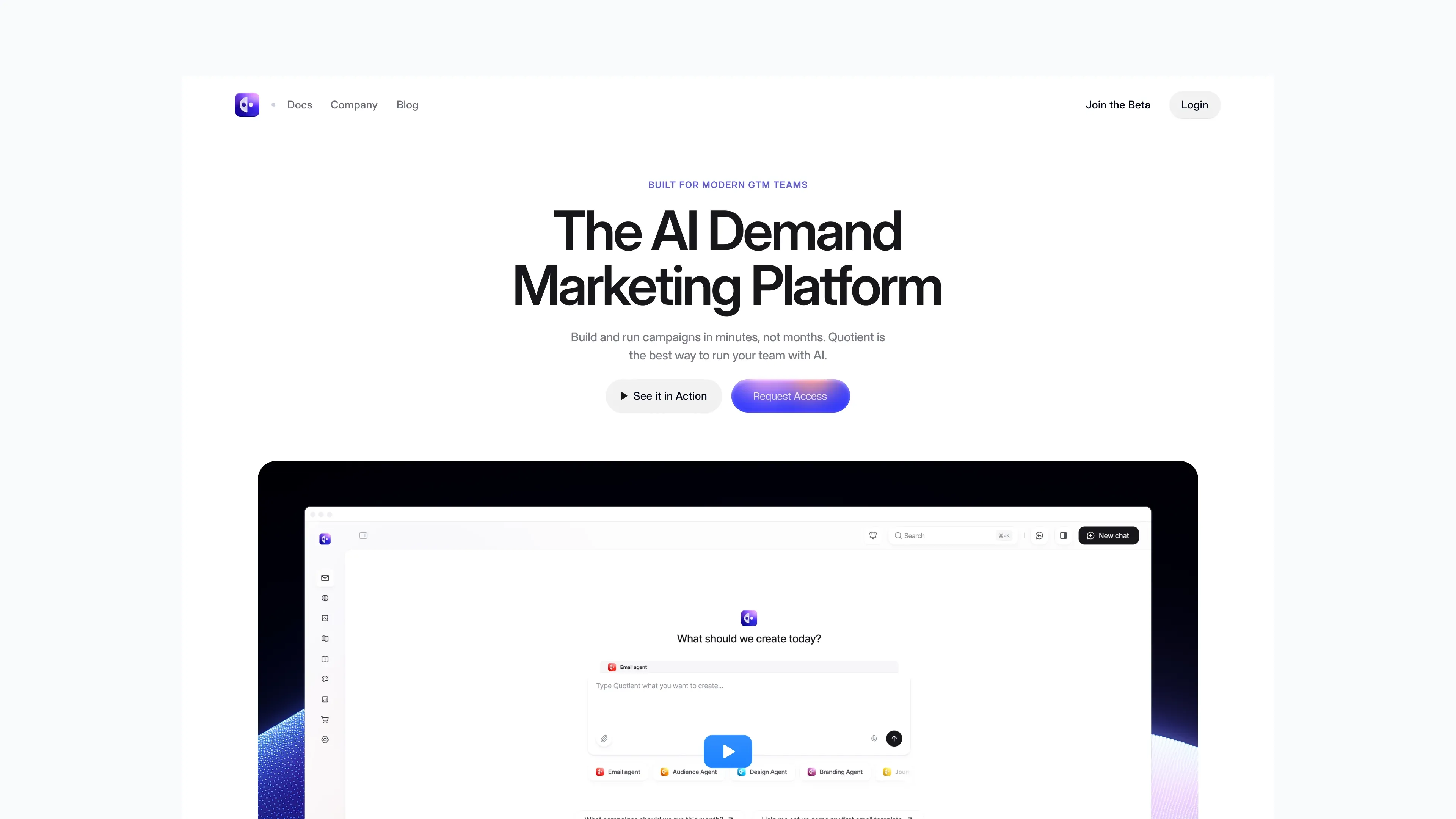
Quotient builds an agentic marketing platform. We started with the brand and the website in 2024, and the work grew into an embedded partnership of 18+ months across the brand, website, pitch deck, product and marketing, with a 5+ person team involved. As Quotient shipped features (plans and upgrades, publishing to LinkedIn, X and Instagram, a campaign calendar), we designed them in the product and in the website sections that introduce them, together. Quotient has raised $5M; the round was the founders’ work, and we supported it with the deck and the brand around it.
Lightdash is an open-source BI platform. Over 16+ months we worked across the brand, the website, the web app and marketing assets, alongside their founding designer, Pri Patel. The new website went live in 8 weeks, and we designed 20+ website pages and templates, plus the social posts, webinar cards and launch pages the marketing team used every week. Most of those were templates, so the team could swap the copy and reuse them. We supported them through an $11M Series A led by Accel (again, their round, our design).
N3XT was in stealth when we met. We took them from an idea to the MVP launch in 3 months, and 6 months in they went live with a complete brand, a live product, an investor-ready story and a $72M raise behind them. The design and development partnership has run 18+ months.
Seamless.AI is the clearest example of starting small. It began with a three-day audit sprint on the landing page and the brand, with one recommendation: a refreshed hero section. That proved the value on a tiny slice, then we redesigned their 130-page Webflow site over 11 months, A/B testing every batch against the live pages. The result: +30% demo bookings, +11% user conversion across the site, +25% engagement and a 20% lower bounce rate. That three-day sprint is the same shape as our UX audit today, and our guide on running a UX audit in 5 days shows how it runs.
Mike Fogg, co-founder of Heroes, said it in a way I like, because it names the model directly: “They were very willing to attempt and deliver on anything we threw at them, which is what you want from a subscription based service where you’re paying for continued deliverables.”
Long retainers, from the work
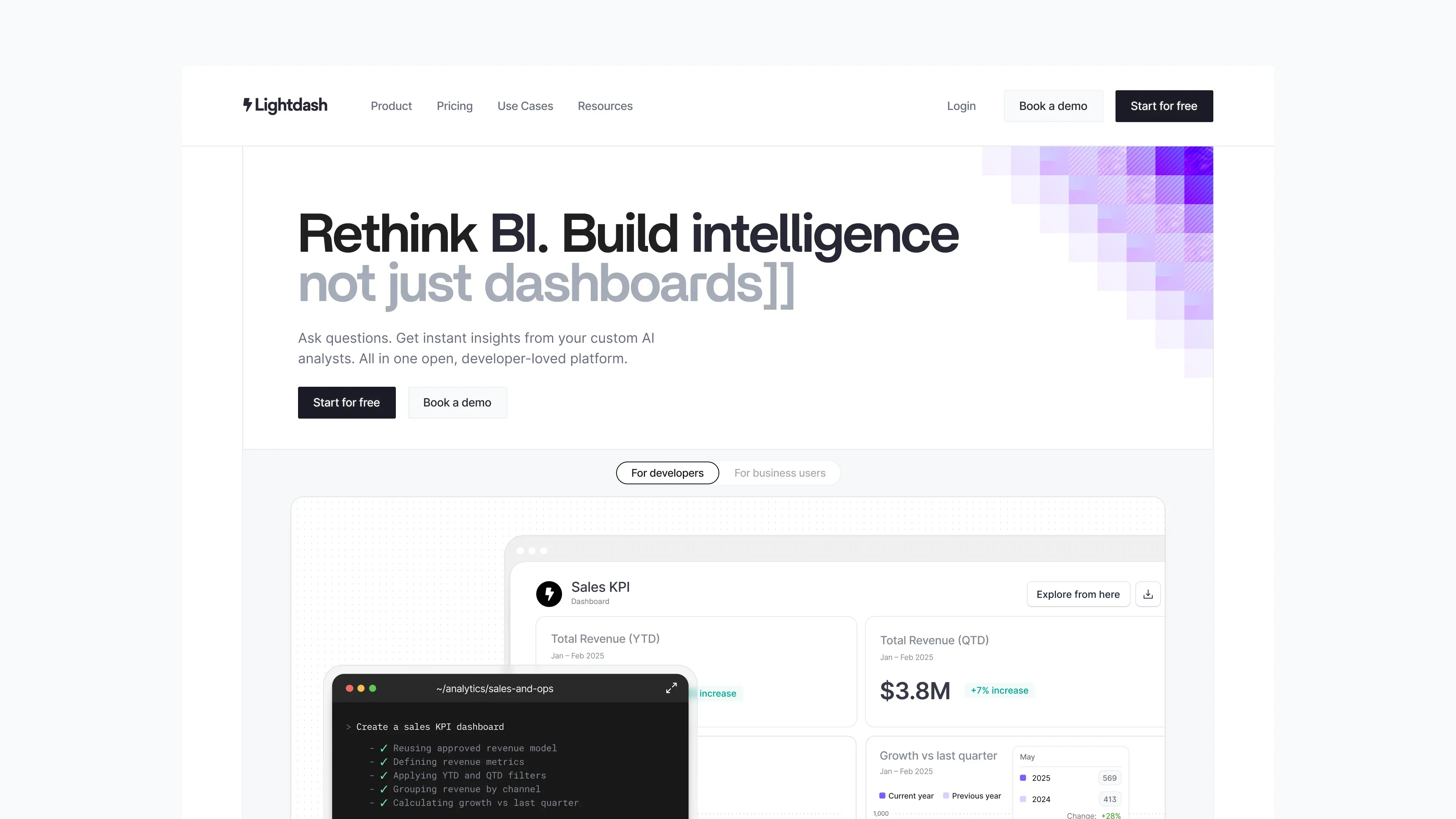
WebsiteLightdash
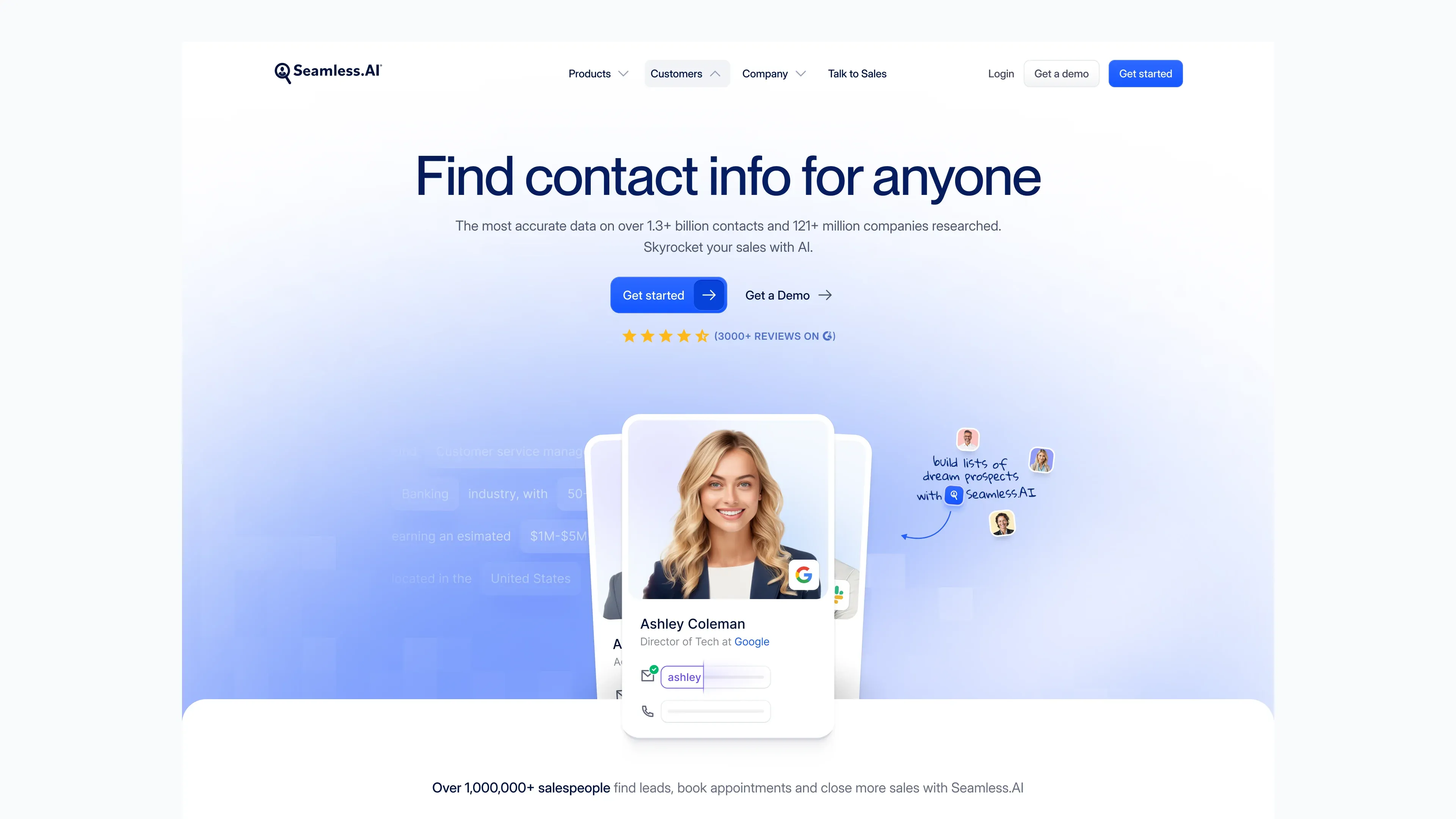
130 pagesSeamless.AI
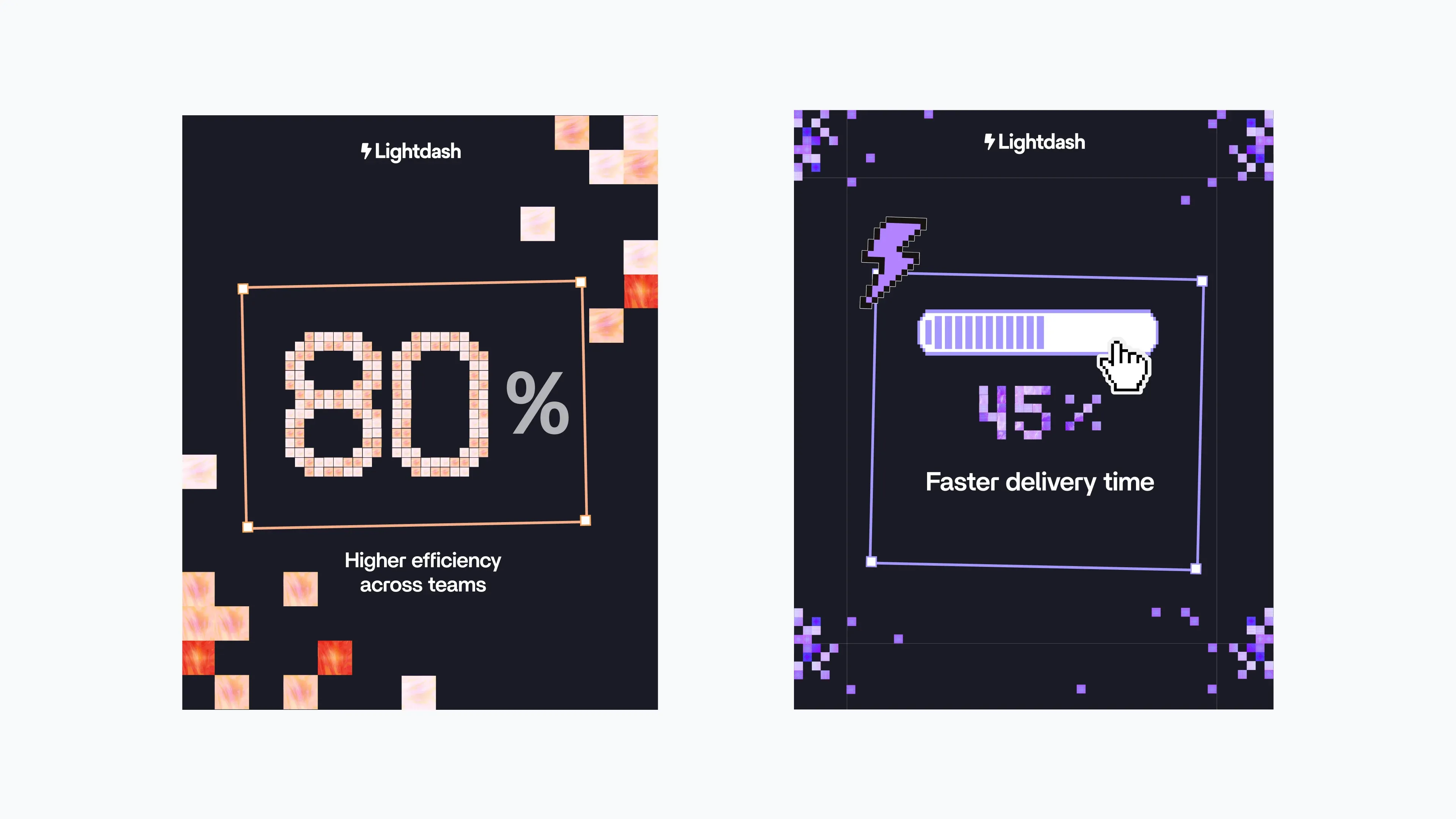
BrandLightdash
DesignMe retainer vs a production subscription vs an in-house hire
Here’s the side-by-side, using only the figures above. DesignMe’s current prices are on /pricing and /design-subscription.
| DesignMe retainer | Production subscription | In-house hire | |
|---|---|---|---|
| Price | See /pricing; pause a month or cancel anytime | $699 to $4,500 a month (ManyPixels, Penji) | About $150,000 a year all-in |
| Who does the work | A project manager, with one to two senior designers on a standard plan, from a team of 15 | A designer working one to four active requests | One person |
| Range | Product, web, brand, motion, code and growth | Graphics and simple pages | One person’s range |
| Development | Included on the Design + Development plans | Most are design only, or build on one platform | Depends on the hire |
| Pace | Most requests in 24 to 48 hour cycles; websites and brand systems take longer | Next-day or same-day turnaround | Full-time, once hired |
| Time to start | Slack kickoff on day 2, requests from day 3 | Varies, so read the terms | 39 days median to fill, before onboarding |
| Files and code | Yours, no lock-in | Ask before you sign | Yours |
| Best for | Websites, product work and launches | Ads, social, sales collateral | Constant, product-deep work |
If your list is mostly the middle column, buy the middle column. If it’s a website, a product flow and a launch on the same calendar, that’s what the left column is built for.
Questions to ask any design service before you sign
- How many requests are worked on at once, and is there a daily hour cap?
- Who does the work: one person, a team, or contractors?
- Is development included, and on which platforms?
- What happens to a request that’s bigger than a typical one, such as a website or a product flow?
- Who owns the files, code and accounts if you cancel?
- Can you pause, and how much notice does cancelling need?
Clear answers to these tell you more than the monthly price does. A good brief helps too, and our guide on how to brief a design agency works for subscriptions as well.
So, are they worth it?
For steady production design with a clear owner on your side, yes, and the lower-priced services are often the right call. For a funded company that needs a website, a product and a launch to come together, a subscription usually covers one piece of it. That’s where a team retainer or a fixed project fits, and once the work is constant and deep in the product, it is time to hire in-house.
If you’re not sure which you need, start small. Our UX audit is $2,500 for 5 to 7 days, and the fee is credited to any package if you continue. For the wider budget picture, see our SaaS website design cost breakdown and the Flowout comparison for another team retainer.
DesignMe is a senior design and development team for funded SaaS and AI companies, on a monthly plan or a fixed project. If you’re weighing a subscription against a team, tell us what’s on your list and we’ll reply within one business day with what we’d recommend, even if it isn’t us:
Sources
- Design Pickle, "Why we dropped unlimited", Russ Perry (24 June 2025) (opens in a new tab)designpickle.com
- Databox, "How Design Pickle grew from the ground up" (23 April 2018) (opens in a new tab)databox.com
- Starter Story, Designjoy breakdown (21 June 2024) (opens in a new tab)starterstory.com
- Designjoy, homepage and plan (checked 10 October 2026) (opens in a new tab)designjoy.co
- ManyPixels, pricing (checked 10 October 2026) (opens in a new tab)manypixels.co
- Penji, pricing (checked 10 October 2026) (opens in a new tab)penji.co
- Kimp, pricing and terms (checked 10 October 2026) (opens in a new tab)kimp.io
- Superside, pricing (checked 10 October 2026) (opens in a new tab)superside.com
- Flowout, pricing (checked 9 October 2026) (opens in a new tab)flowout.com
- Clutch, web design pricing guide (updated 21 September 2026) (opens in a new tab)clutch.co
- US Bureau of Labor Statistics, Occupational Outlook Handbook, web developers and digital designers (May 2025 data) (opens in a new tab)bls.gov
- US Bureau of Labor Statistics, Employer Costs for Employee Compensation (June 2026) (opens in a new tab)bls.gov
- SHRM, Recruiting Benchmarking (2026: median 39 days to fill, down from 44 in 2025) (opens in a new tab)shrm.org
Press Escape to close.
Free website cost calculatorWhat should your website cost?