Overview
Brand and website for a nonprofit bringing AI into India’s courtrooms
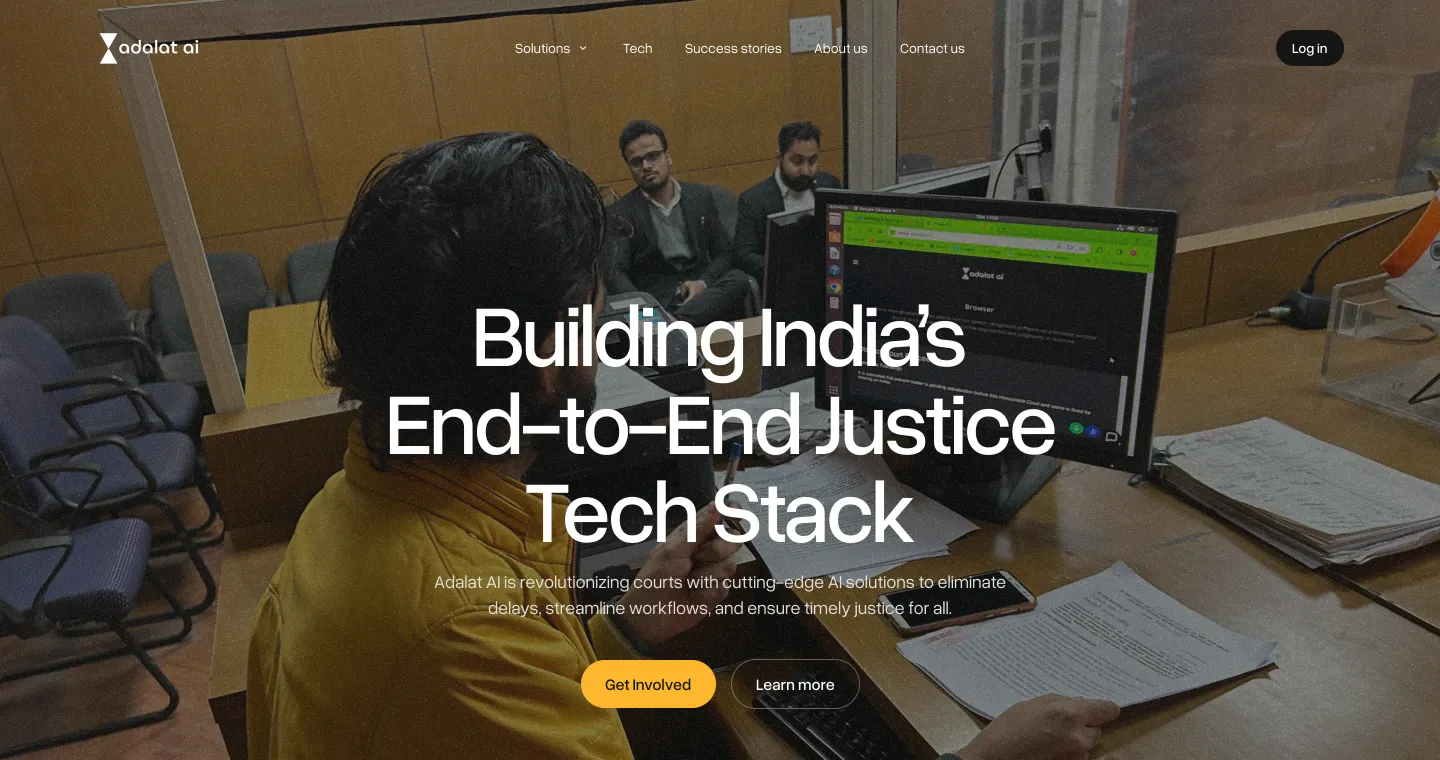
Adalat AI builds transcription and case tools for Indian courts. We designed its brand and website, and built the site in Webflow and Framer.
- Adalat AI joined Y Combinator’s Fall 2026 batch
- YC F26
- Grant from The Agency Fund
- $500K
- Courtrooms using Adalat AI’s tools, per Bar & Bench
- 6,000+
About the project
Adalat AI is a nonprofit that puts speech recognition and case tools into Indian courtrooms, so judges spend less time on paperwork and more time hearing cases. Its website has to speak to judges, state governments, funders and future hires at once.
We designed the brand and several generations of the website, from the homepage to the impact, careers and articles pages, and built the site in Webflow and Framer.
The work ran from 2024 into 2025, while Adalat AI grew from a research project into a team working with courts across several Indian states. Each round of the site had to keep up: new products, new partners, new numbers and new roles to hire for. The Figma file holds that whole history, from a moodboard and wireframes through five earlier site generations to the design that is live on adalat.ai today.
- Client
- Adalat AI
- Industry
- Legal tech, nonprofit
- Services
- Brand identity · Website design · Webflow and Framer build
- Timeline
- 2024 - 2025
The challenge
Courts are careful buyers. The site had to feel as steady as a public institution and as current as the AI behind it, without burying visitors in legal or technical jargon.
- Many audiences, one homepage
- Judges, court staff, state governments, funders and engineers all land on the same page and each needs a clear next step.
- Trust before features
- Public institutions adopt slowly. The design had to look established and careful, not like a startup demo.
- A suite, not one tool
- Transcription, case flow, document scanning, litigant chatbots and legal research had to read as one stack.
- Room to grow
- New states, new products and new countries had to fit in without a redesign.
There was a second, quieter problem. Most visitors arrive knowing little about how an Indian courtroom works. Before the site can sell a tool, it has to show why a judge hears only a few witnesses a day, why files go missing and why a litigant can wait years for an answer.
The brand
The brand starts from one line Adalat AI uses about its work: justice delayed is justice denied. The hourglass mark carries that idea of time, and a warm near-black with a single yellow accent keeps it serious without feeling cold.
Headlines are set large in Inter, with plenty of white space around it, so long statements about the justice system stay easy to read. Small labels in the accent colour, such as Solution #1 or Our impact, mark each section, and soft cream panels hold the product mocks so they read as one family.
An isometric courtroom shows the problem before any copy explains it: stacks of files, a crowded gallery and a judge with no time to spare. On the live site it is interactive: each glowing hotspot clears the room down to one problem and the Adalat AI tool that answers it. The wordmark closes every page at full width.
Early explorations
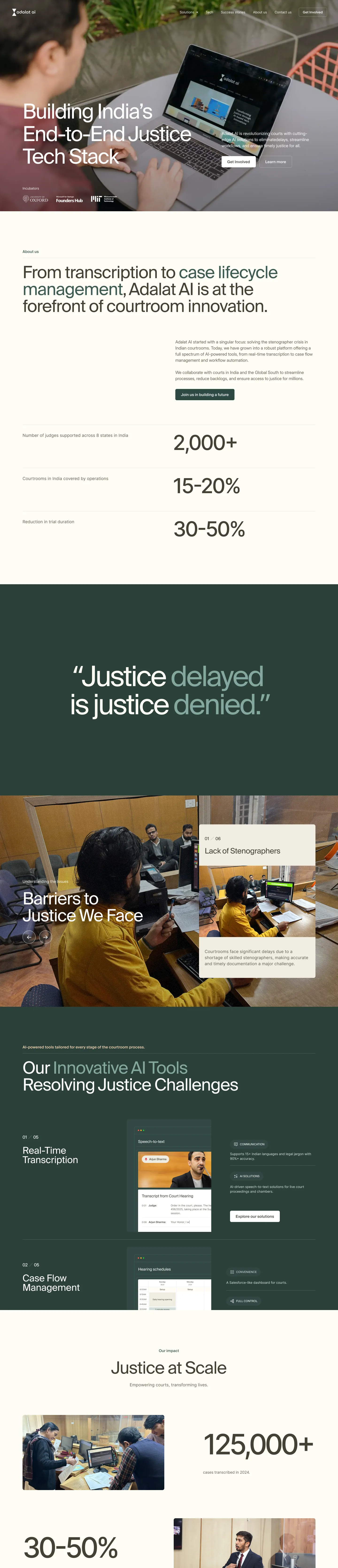
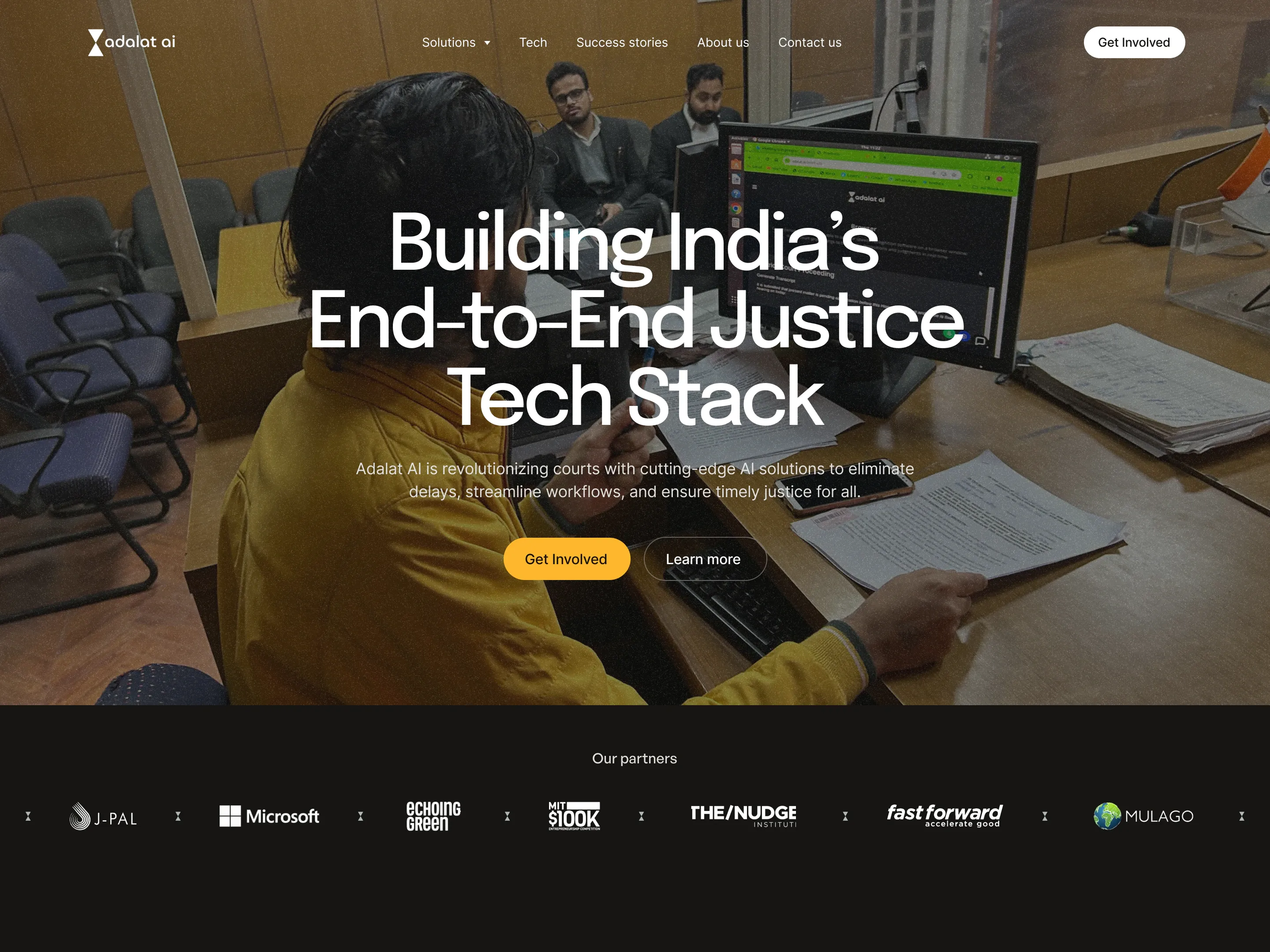
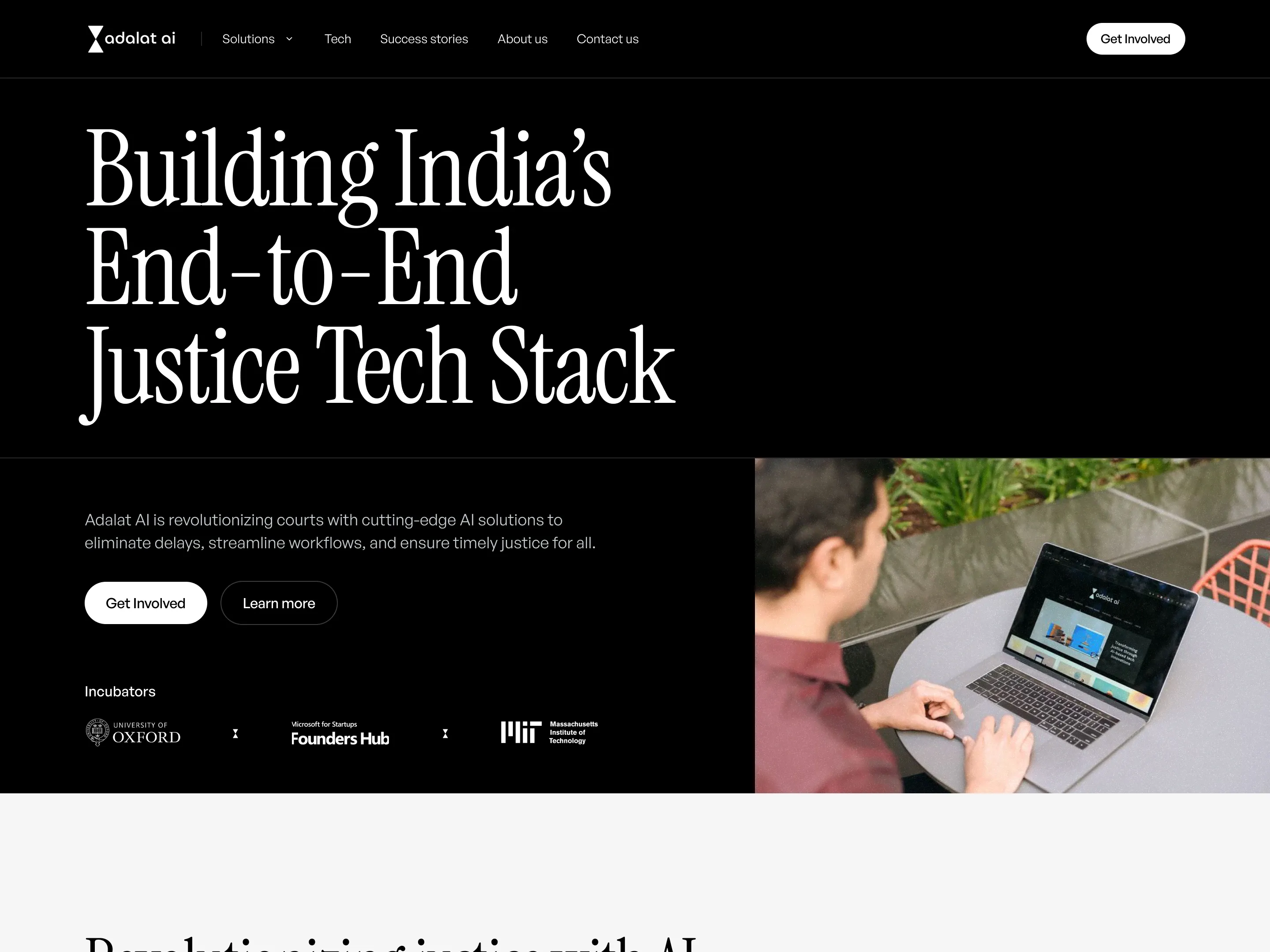
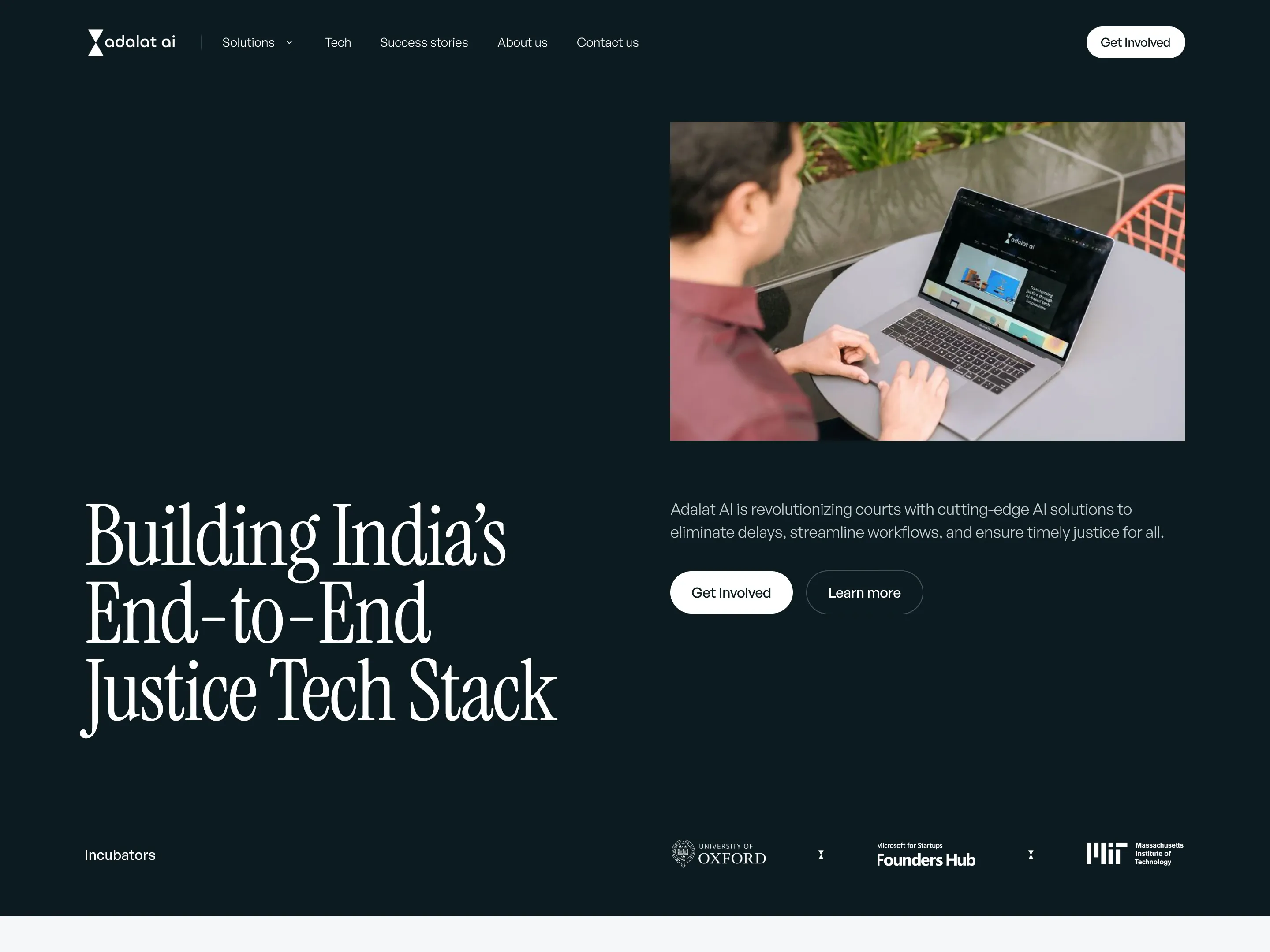
Before the final design, we took the homepage through several explorations in the same Figma file. None of them is the live site: each one tested a different answer to how an institution for courts should look.
The first exploration was a full homepage in deep green, top to bottom, with large photography and a calm, editorial pace. Versions 2, 3 and 4 then tried the hero three more ways: a courtroom photo behind the headline, an editorial serif on black, and the same serif on deep teal. The final homepage, shown in the rest of this case study, took what worked from these rounds.
The website
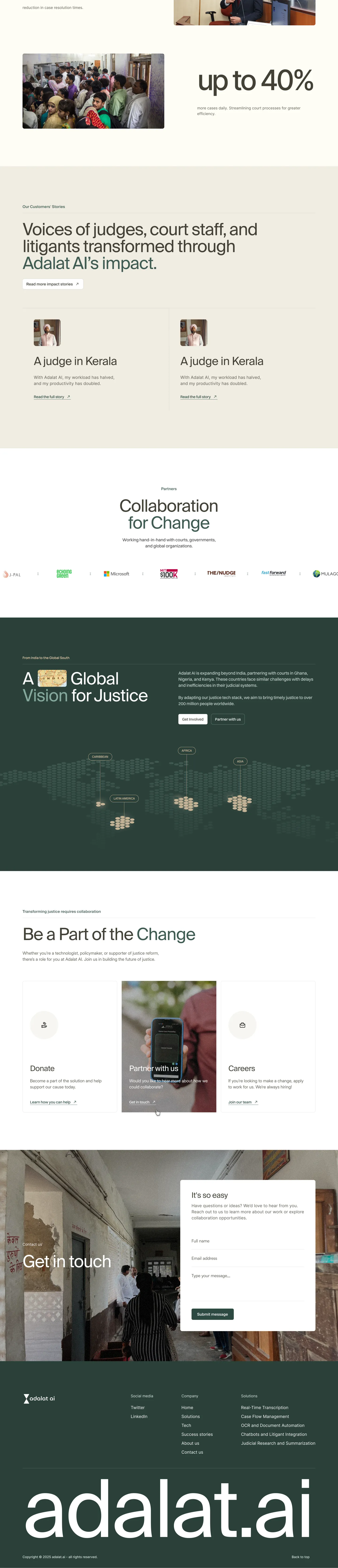
The homepage moves from the problem to the product to the proof: why courts are stuck, the five tools that help, and what has changed in the courts already using them.
- The problem in numbers
- Pending cases, the years it would take to clear them and people waiting for trial, stated plainly on a dark band.
- One pattern per product
- Each tool gets the same layout: a small product mock, a short description and what it does best.
- Results that climb
- Court coverage, judicial output and faster case resolution step up across one chart instead of a list of claims.
Between the numbers and the products sits Barriers to Justice, six short cards that name what slows a court down: the shortage of skilled stenographers, paper-driven workflows, unstructured case management, litigants left in the dark, language barriers and cumbersome document analysis. Each card links to the tool that answers it, so the problem and the product are never more than one click apart.
Five tools, one stack
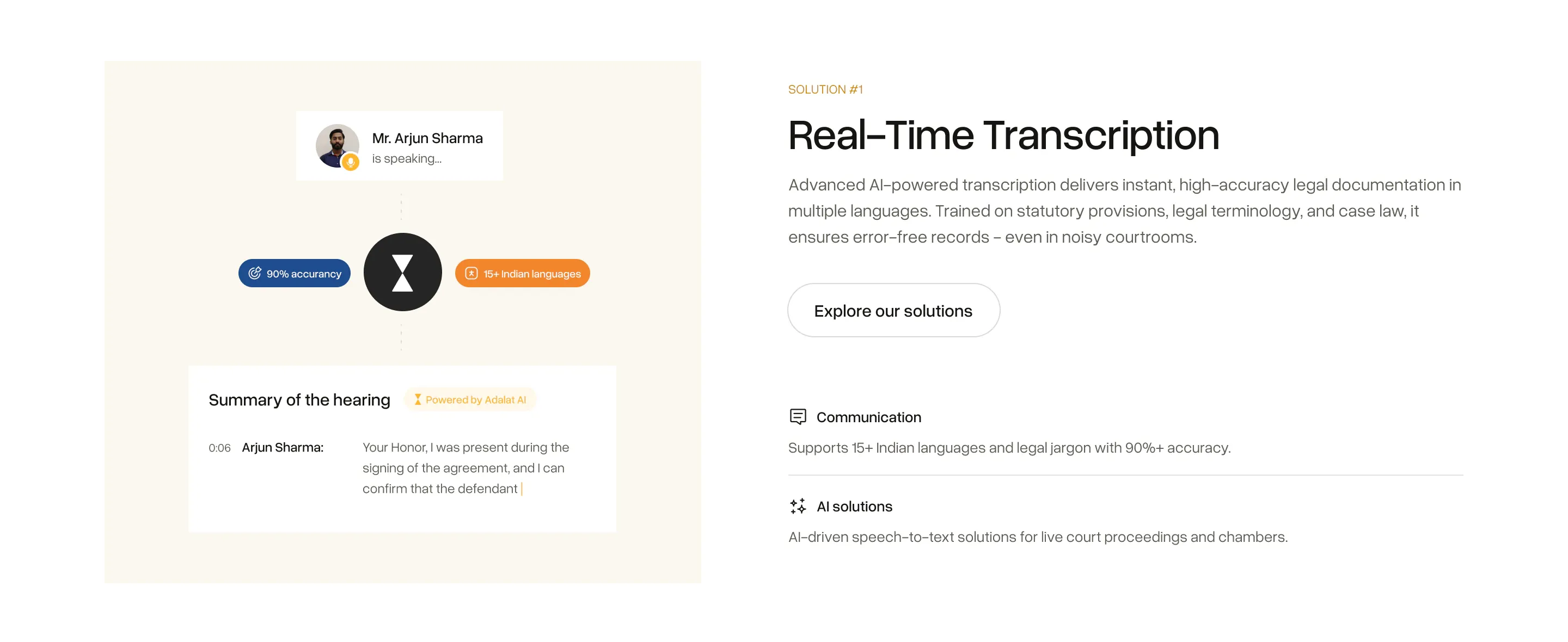
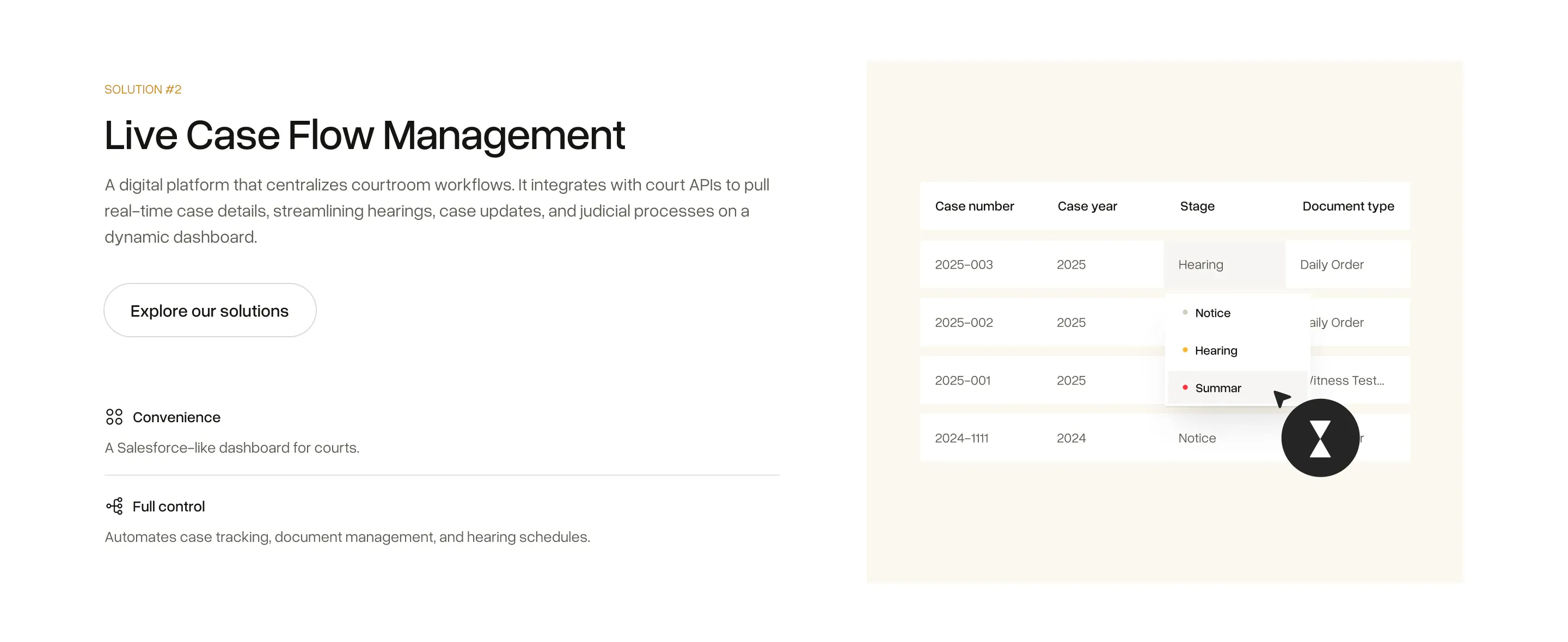
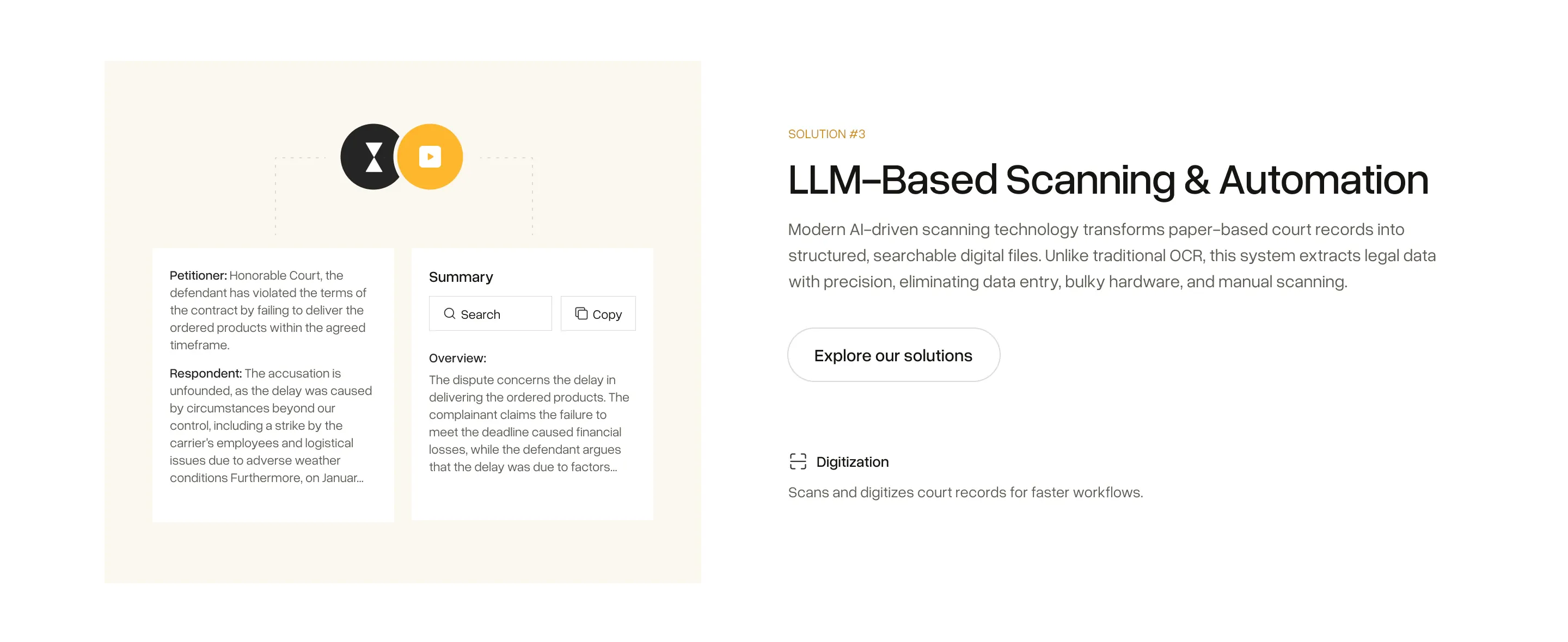
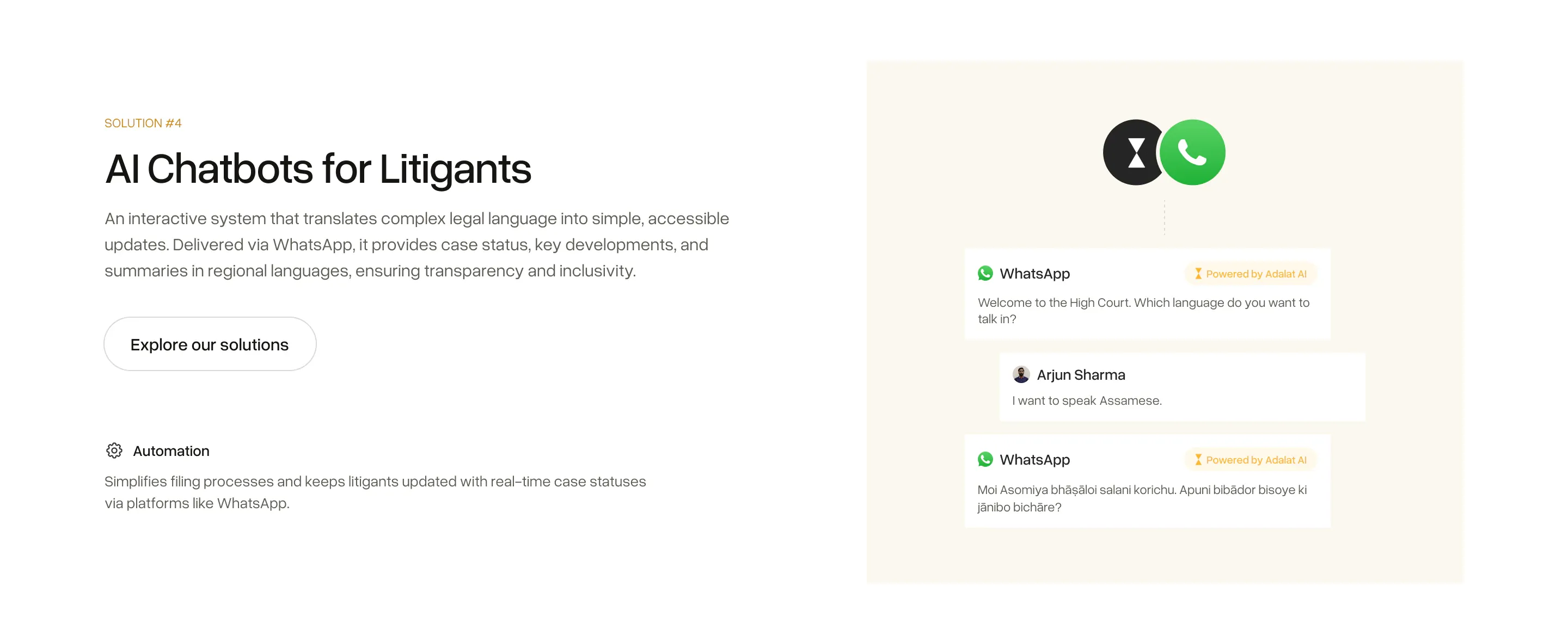
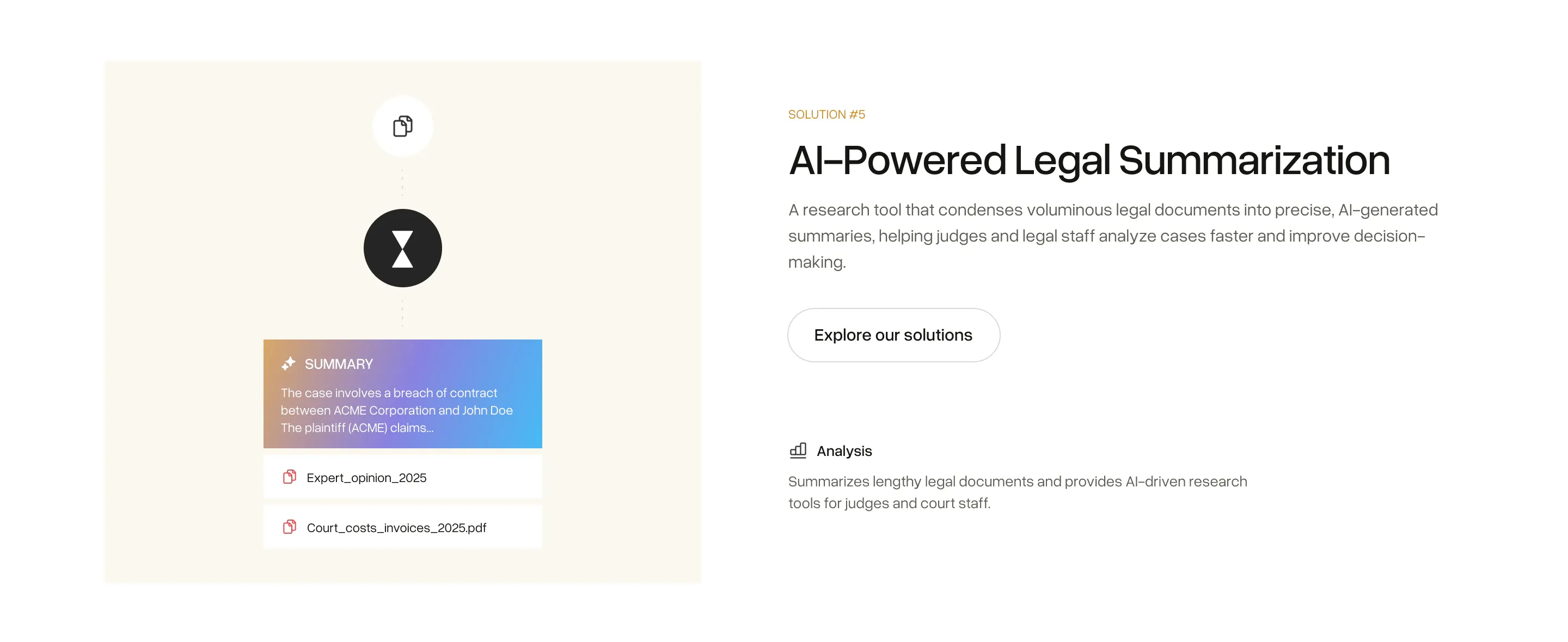
Adalat AI sells a suite, so every product follows the same pattern: a numbered label, a plain-language title, two short benefits and a small mock of the tool on a cream panel. Read top to bottom, the five rows tell one story about a case moving through court.
- Real-Time Transcription
- Speech-to-text for live hearings and chambers. The mock shows a speaker being transcribed and a summary of the hearing, with 15+ Indian languages called out.
- Live Case Flow Management
- A dashboard for courts that pulls case details from court systems: a table of case numbers, stages and document types with a stage picker.
- LLM-Based Scanning and Automation
- Paper records turned into searchable digital files. The mock pairs a scanned petition with a summary panel and search.
- AI Chatbots for Litigants
- Case updates over WhatsApp in a litigant’s own language. The mock shows a conversation switching to Assamese.
- AI-Powered Legal Summarization
- Long case files condensed into short summaries for judges and court staff, shown as a summary card above the source documents.
We drew the mocks as simplified product UI rather than screenshots, so they stay readable at any size and don’t date every time the real product ships an update.
Pages for every audience
Beyond the homepage, each audience gets a page of its own: an impact page with the states Adalat AI works in, a global view for funders, and clear routes to donate, partner or join the team.
- Impact
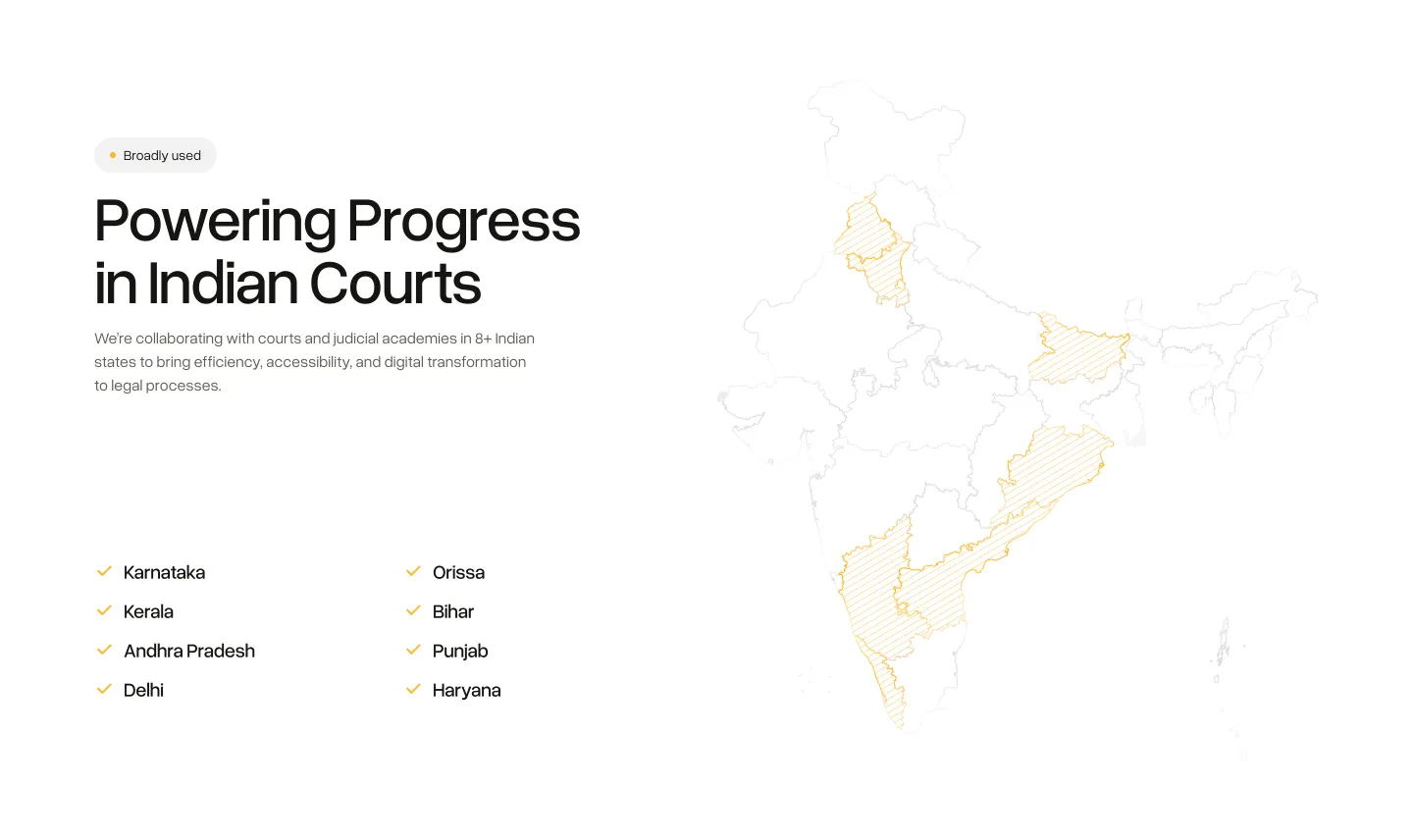
- A map of the Indian states using Adalat AI, with the figures the team reports for courts supported, courtroom coverage and case resolution.
- About us
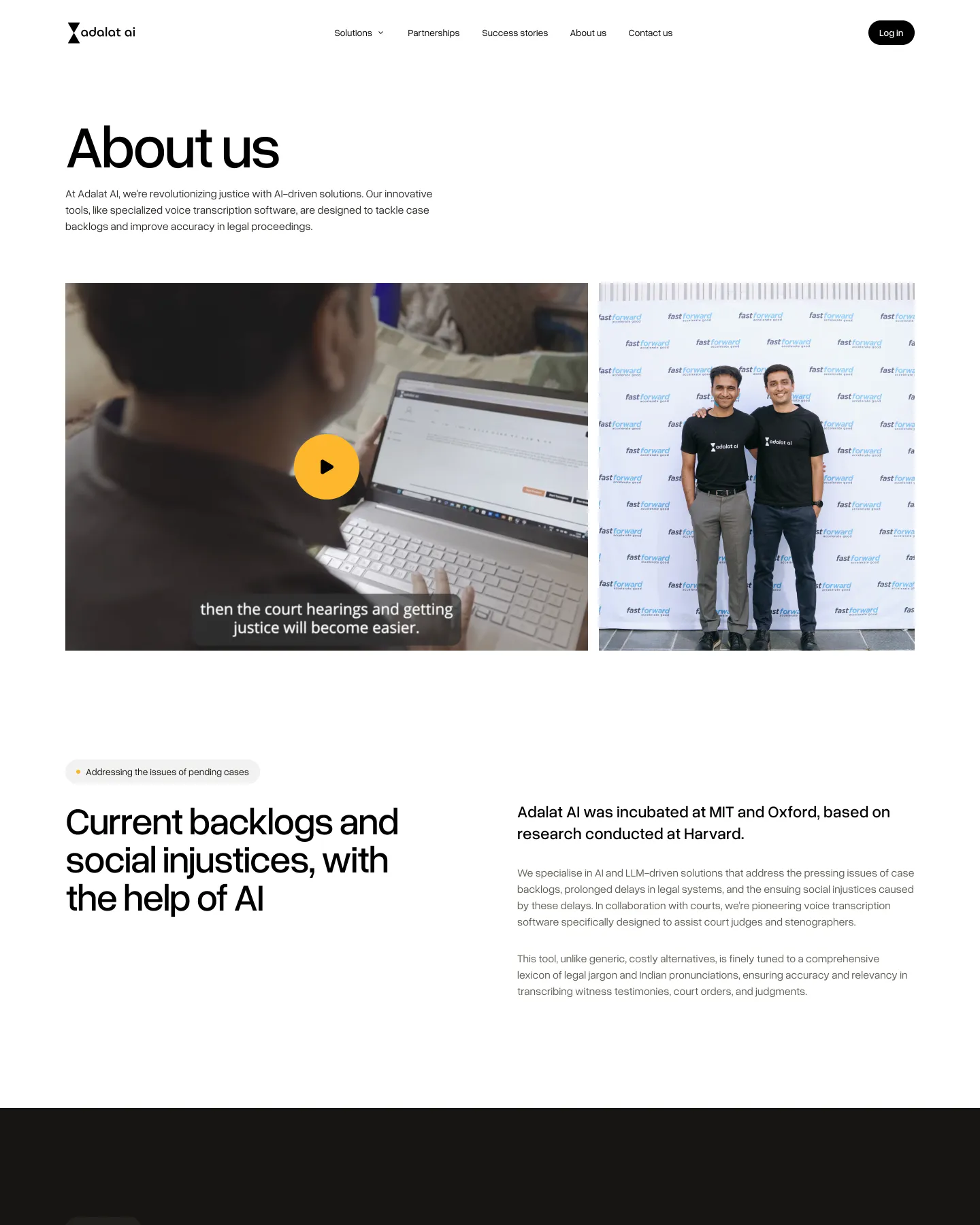
- The founding story, the research behind the tools and the people on the team, from the co-founders to the founding engineers and designer.
- Careers
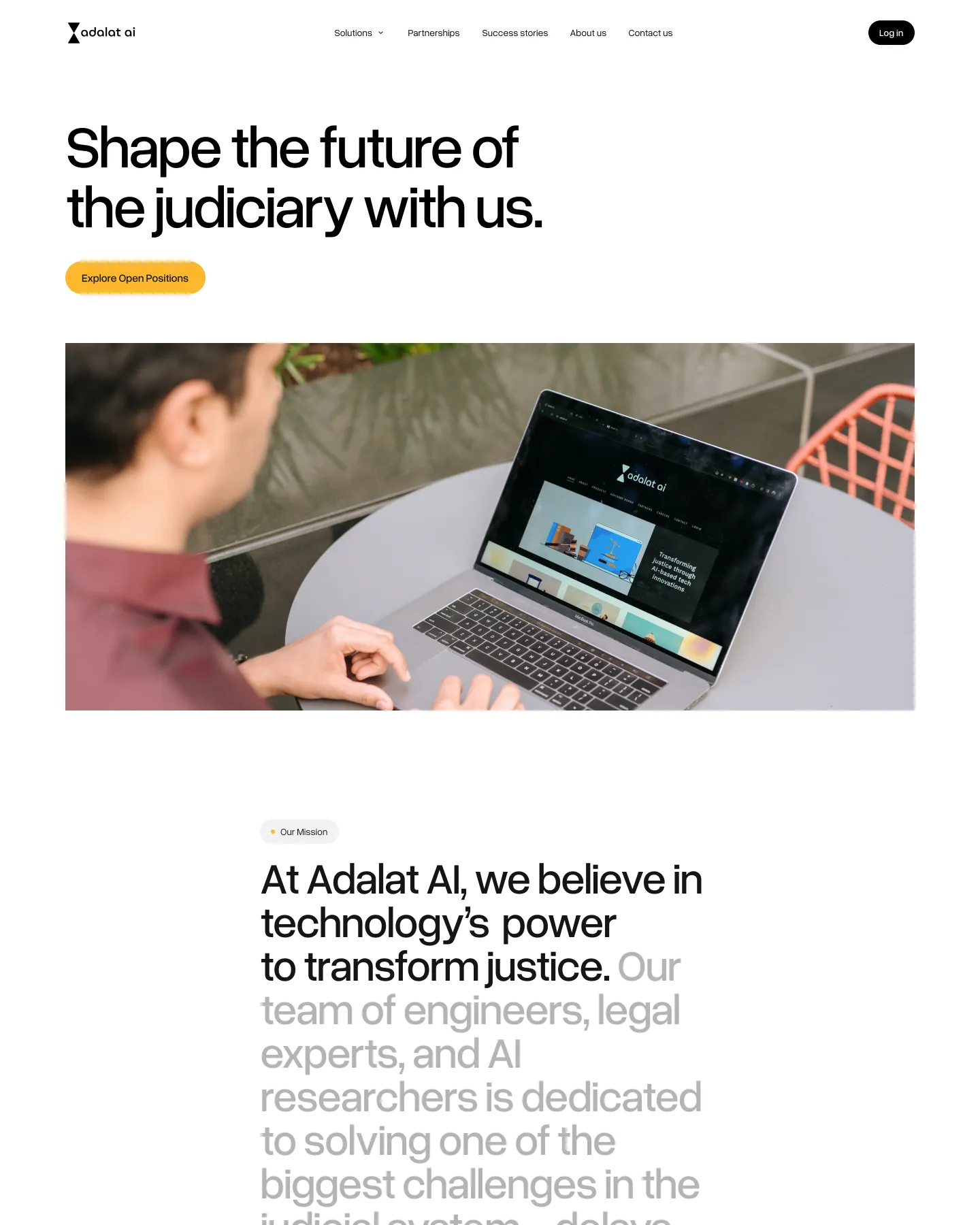
- Shape the future of the judiciary with us: the mission, open roles with Apply now buttons, and five reasons to join, from learning and development to work that makes a real impact.
- Contact
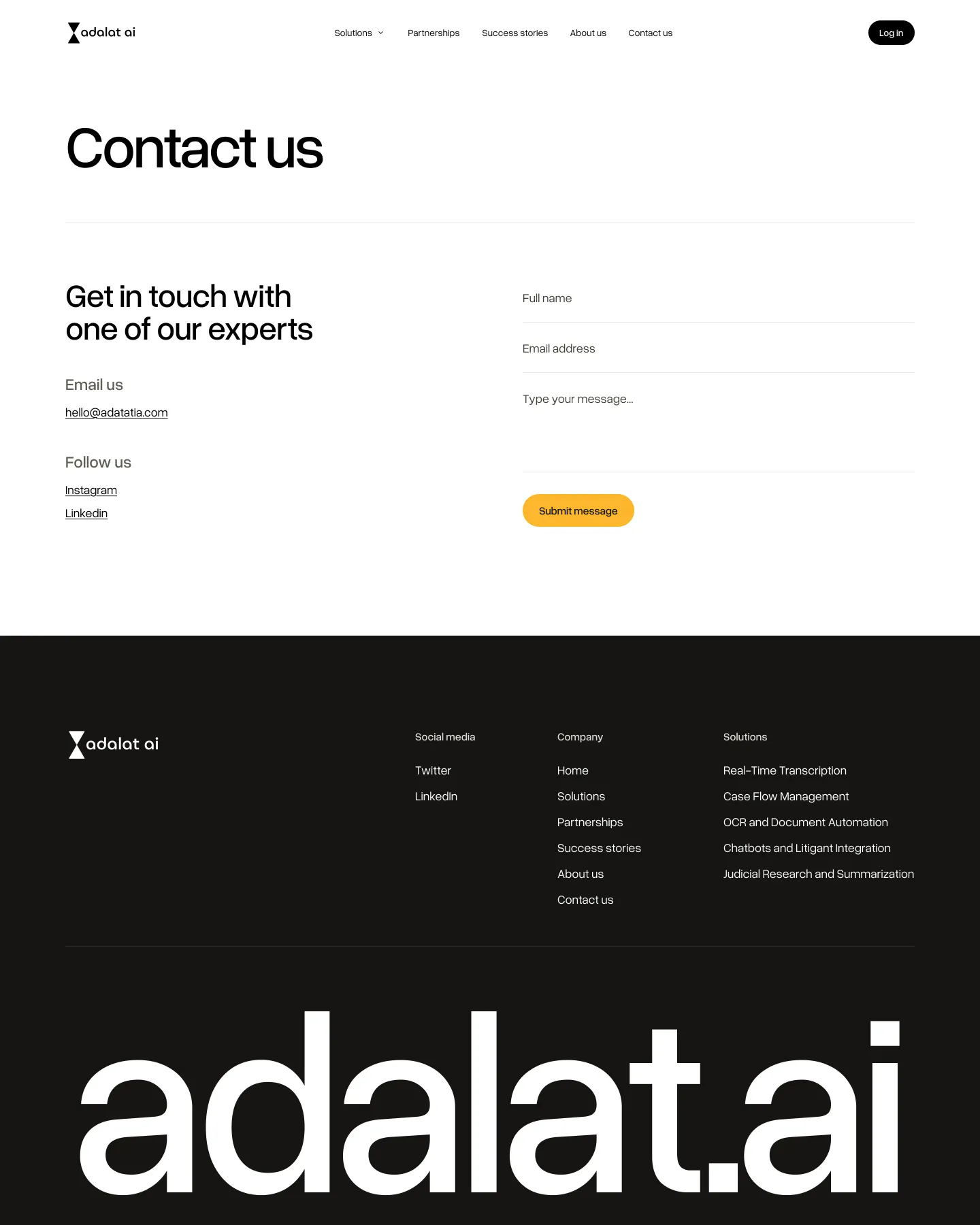
- One short form, an email address and the team’s social links, on the same calm layout as the rest of the site.
The homepage closes with Be Part of the Movement: three hand-drawn cards for donating, partnering and joining the team. For a grant-funded nonprofit, those three routes matter as much as any product page.



Articles hub
Adalat AI writes about law and AI for two very different readers, so the articles hub splits into tech and legal tracks, each with topics, search and featured pieces.
We designed the hub in three rounds in the Figma file. The final version keeps the site’s near-black, puts the full wordmark in the hero above Where Law Meets Artificial Intelligence, and lets readers switch between Tech and Law and Policy with one toggle.
Results
Adalat AI came out of the work with a brand that carries its mission, a website that speaks to judges, governments, funders and future hires, and a build its team can keep extending in Webflow and Framer.
The site grew with the organisation through several generations without starting again: new products slot into the same solution pattern, new states land on the impact map and new roles go on the careers page. Adalat AI’s own milestones, including the grant from The Agency Fund and its place in Y Combinator’s Fall 2026 batch, are the team’s achievements; our part was making the work look as serious as it is.
- AI tools explained with one repeatable section pattern
- 5
- Site generations in the Figma file, five earlier rounds and the live design
- 6
- Rounds of the articles hub before the final design
- 3
- Builds: Webflow and Framer
- 2





- Helping a 1M+ user sales platform improve website engagement and conversion rates.
- Designed the brand and digital experience for a $72M-funded next-gen narrow bank platform.
- Refreshing the brand, the product and the website experience behind Lightdash’s $11M Series A
- Redesigning and rebuilding the mobile experience for an AI-powered athlete development app with 300K+ users.
You've reached the end, so now…
Tell us what you’re building.
We’ll help you map the right scope, team, timeline, and next steps.
Book a call